Introduction
A promising idea and a clear understanding of customers are important foundations for entrepreneurship. However, a business also needs a practical way to deliver value and generate enough revenue to sustain its operations.
This is where a business model becomes essential.
A business model helps entrepreneurs understand how their venture will operate, whom it will serve, what value it will provide, and how it will earn revenue.
What Is a Business Model?
A business model explains how a business creates, delivers, and captures value.
It connects several important elements, including the product or service, target customers, pricing, revenue sources, expenses, and distribution methods.
A clear business model helps entrepreneurs evaluate whether their ideas are practical and identify the resources required to operate successfully.
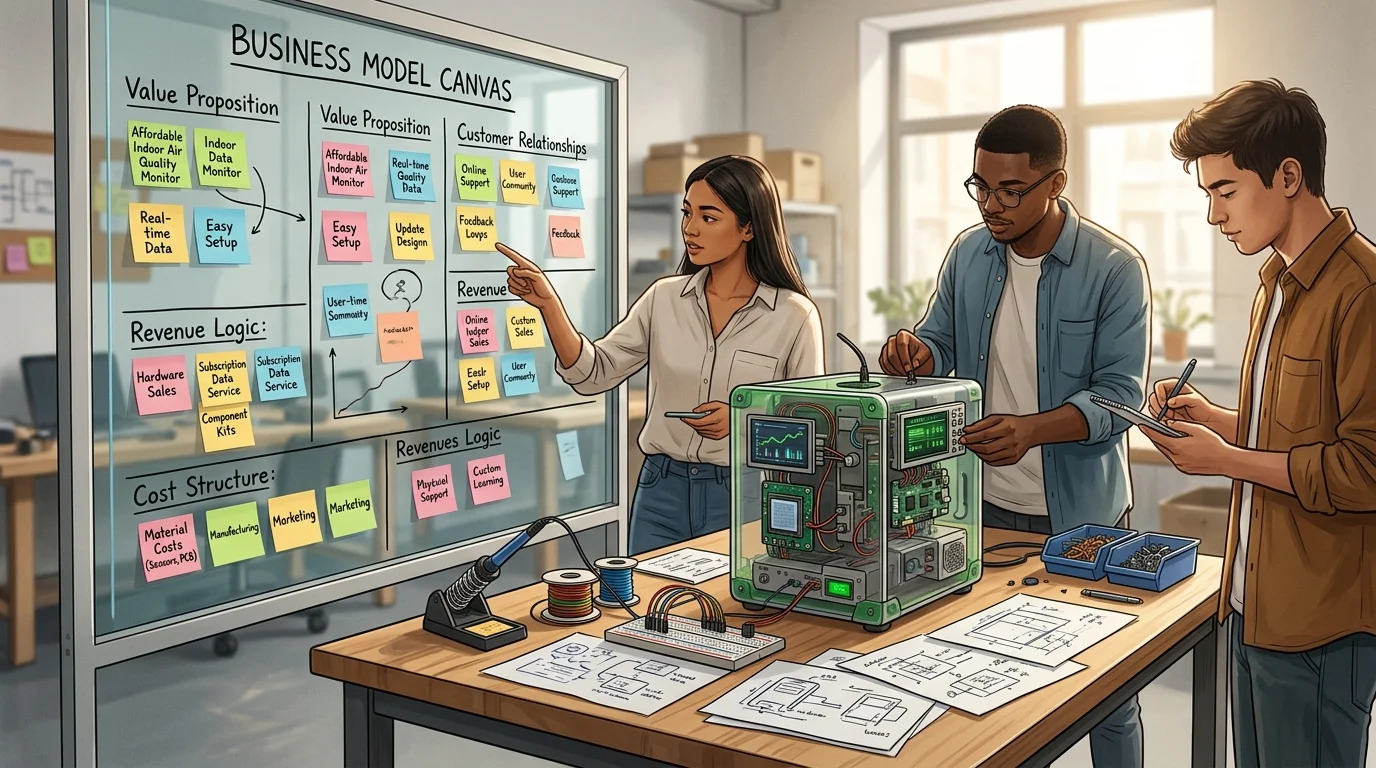
Key Components of a Business Model
##### 1. Value Proposition
The value proposition explains why customers should choose your product or service.
It could offer greater convenience, better accessibility, affordability, quality, or a solution to an unmet need.
Entrepreneurs should clearly identify what makes their offering useful to customers.
##### 2. Target Customers
Define the group of people most likely to purchase your product or service.
Understanding their needs, preferences, and spending capacity helps you make better decisions about product design and marketing.
##### 3. Revenue Streams
Revenue streams describe how a business earns money.
Depending on the business, revenue may come from product sales, service fees, subscriptions, commissions, or other suitable sources.
Entrepreneurs should identify which revenue sources are realistic for their target market.
##### 4. Cost Structure
Every business has expenses. These may include raw materials, equipment, packaging, transportation, marketing, rent, and labour.
Understanding these costs helps entrepreneurs estimate the resources needed to operate the business.
##### 5. Distribution Channels
Distribution channels explain how products or services reach customers.
Businesses may sell through physical stores, websites, social media, direct orders, marketplaces, or suitable distribution partners.
The right channel depends on customer behaviour, product requirements, and operating costs.
##### 6. Customer Relationships
Businesses need ways to attract customers, respond to questions, collect feedback, and encourage repeat purchases.
Reliable service, consistent quality, and clear communication can help build customer trust.
An Example: A Small Homemade Snack Business
Consider a student who wants to sell homemade healthy snacks.
The business model could include the following elements:
- Value proposition: Convenient snacks made with carefully selected ingredients.
- Target customers: Students, staff, and people interested in traditional snacks.
- Revenue stream: Direct sales of individual products and pre-ordered boxes.
- Cost structure: Ingredients, packaging, preparation, and transportation.
- Distribution channels: Direct orders and college events, where permitted.
- Customer relationships: Feedback, consistent quality, and clear communication.
Before launching, the student would need to calculate costs, assess demand, determine appropriate prices, and comply with applicable food safety requirements.
This example demonstrates how a business model connects an idea with the practical activities required to serve customers.
Why Should Entrepreneurs Test Their Business Models?
A business model is not necessarily permanent. Customer needs, competition, expenses, and market conditions may change.
Entrepreneurs should regularly evaluate their assumptions and make adjustments when necessary.
For example, if customers find a product useful but consider it too expensive, the business might explore different packaging, production methods, or product sizes without compromising essential quality and safety.
Small experiments can help determine whether a proposed change improves the business.
Common Mistakes to Avoid
Entrepreneurs should not assume that high sales automatically mean high profits. Revenue must be considered alongside expenses.
Other common mistakes include setting prices without calculating costs, overlooking distribution expenses, depending on a single customer group, and expanding before understanding demand.
A practical business model should account for both customer value and financial sustainability.
Conclusion
A business model transforms an entrepreneurial idea into a structured plan for creating value and sustaining operations.
By defining the value proposition, understanding customers, identifying revenue sources, calculating expenses, and selecting suitable distribution channels, entrepreneurs can make more informed decisions.
For student entrepreneurs, the goal is not to create a complicated business plan immediately. It is to understand the fundamentals, test assumptions, and improve the model through experience.
A good idea creates interest, but a workable business model helps turn that idea into a sustainable venture.
Next Article in Series: Funding Your Startup: Starting Small, Thinking Big →
Published by SATHAKIANZ | Team ID: NEC2631795 | Mohamed Sathak Engineering College | MSEC EDC | National Entrepreneurship Challenge (NEC) 2026